Focus Story
AI Technology
Hitting a High Note: Wall Street's Bold Bet on Lyricism
Dr.V, Ian Chang
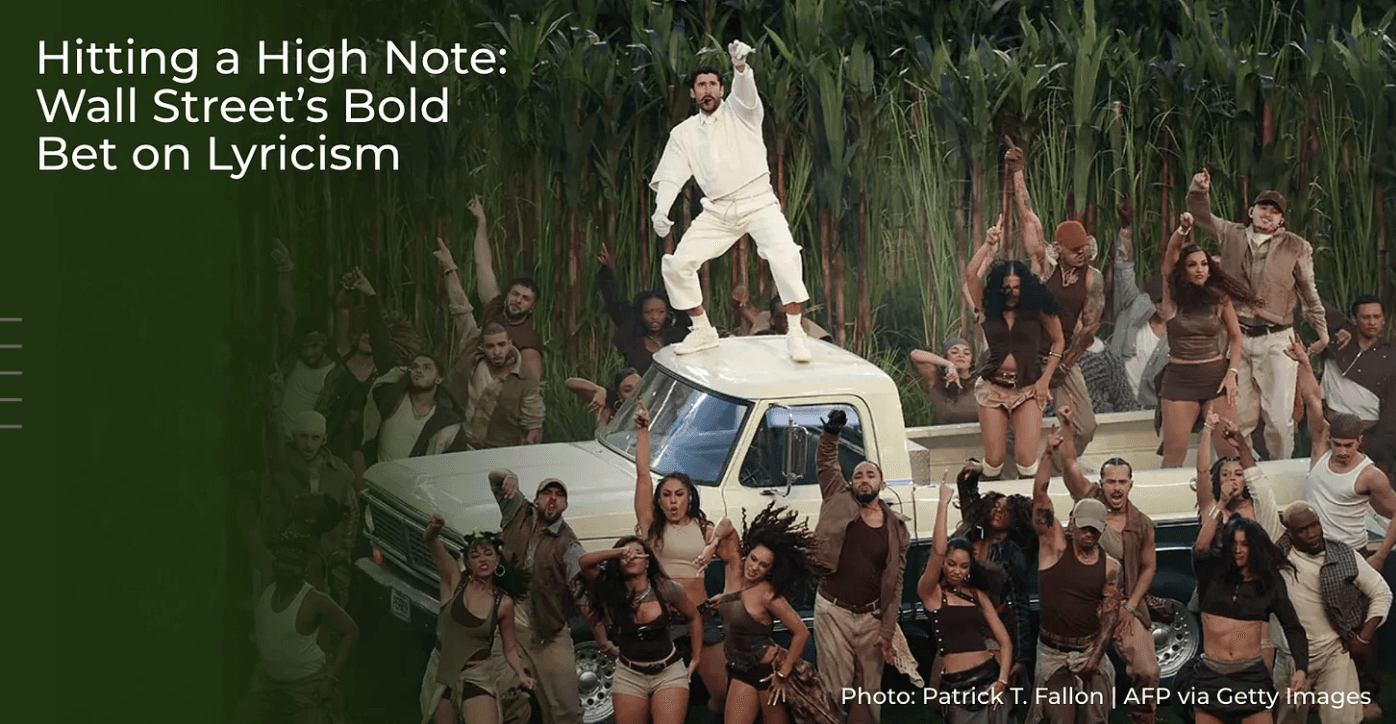
With steady, recurring, and largely uncorrelated cash flows, music royalties have emerged as a new asset class — one that amplifies 50 Cent’s value far beyond his namesake. You’ve seen the shift yourself. Bad Bunny’s electrifying Super Bowl performance, which reportedly brought in up to $50 million for the NFL, underscores the industry’s underlying dynamics: modern music is shaped by culture but sustained by capital.
At ODDBIRD although media assets aren’t our category, we love to share peculiar ideas that reveal their ingenuity with a closer look.
Hipgnosis Songs Fund
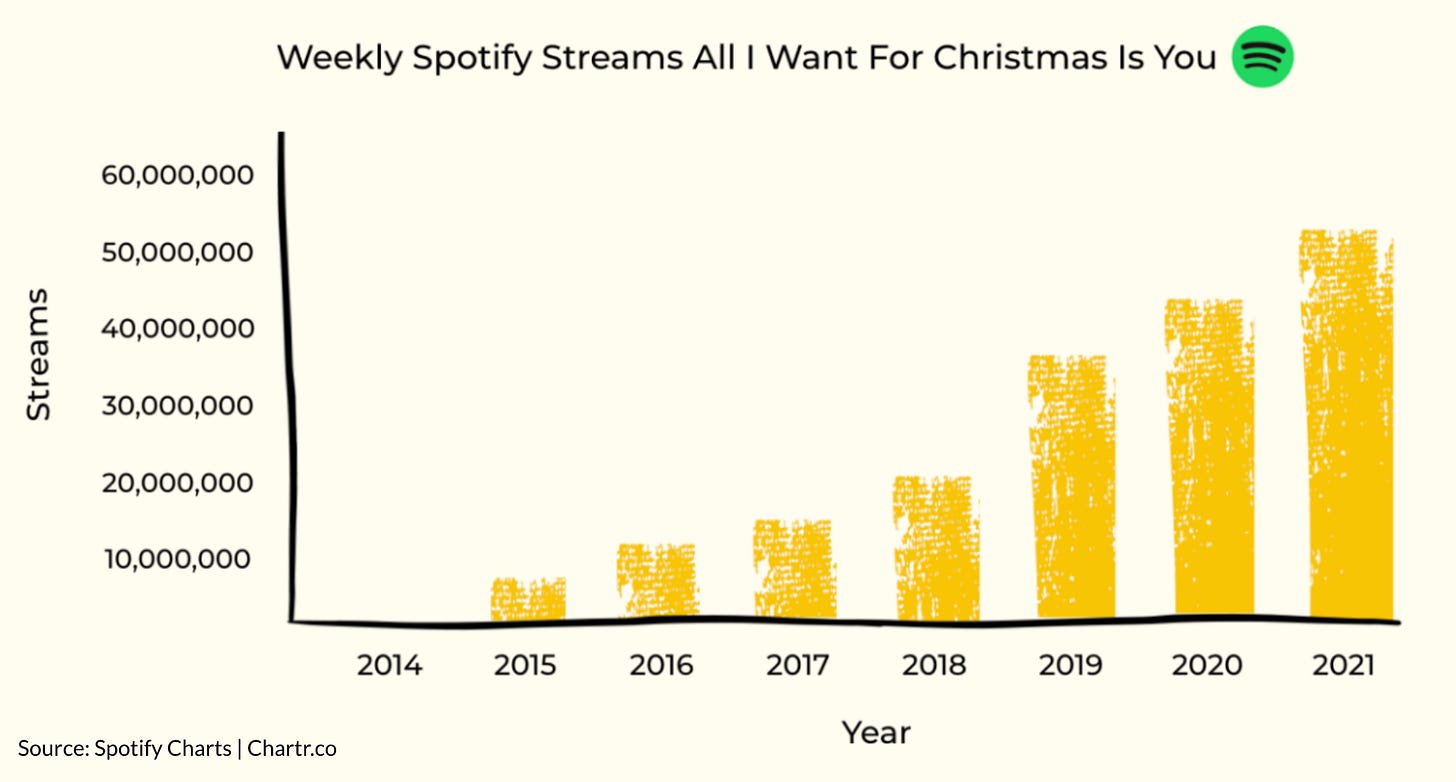
Every Christmas, from the lofty, glowing windows of the financial district, the financial implications behind music royalties become audible. As Carey’s All I Want for Christmas cuts through the soft scrape of skates at the Rockefeller Center rink, investors know that the song will rack up tens of millions of streams within the coming weeks. This predictability is what led Blackstone to acquire Hipgnosis Songs Fund, a publicly traded catalog of 45,000 tracks (including hits from Shakira, Bon Jovi, and 50 Cent) and establish the Recognition Music Group (RMG), a platform managing over $4B in catalog assets.
Turning Songs Into Bonds
Blackstone’s initial acquisition was just the beginning. After purchasing Hipgnosis, the firm pushed the experiment further by securitising the royalty streams. The $1.47B “Lyra 24-2” issuance was among the largest music ABS deals ever, packaging streaming and licensing income into A-rated, bond-like instruments. Another $372M tranche followed in 2025.
The notes were oversubscribed, attracting insurers and pension funds seeking predictable returns. In doing so, Blackstone refinanced existing debt and unlocked fresh capital. The structure resembled real estate finance: royalty streams were packaged into structured credit — only here, the tenants are listeners on Spotify and TikTok.
Operating Like a Platform
Beyond financial structuring, Blackstone is pursuing something quieter and more durable: the professionalization of song management itself. Through data, RMG gains insight into how songs circulate across streaming services, social media, and television; this influences how it manages its catalogs. Tracks that once sat idle can be reintroduced to new audiences, unreported usage can be identified, and new licensing opportunities can emerge earlier systematically. In one case, similar tech found $100M+ in missed royalty collections! Active management applied to IP is a powerful shift; a new example of using platform infrastructure to turn fragmentation into yield.
The Risks Are Real
Managers acknowledge that royalties are inherently risky and the opportunity lies in pricing, structuring, and managing the risks:
Valuation uncertainty. Forecasting future royalties remains an inexact exercise. Music catalogs are long-lived, sensitive to interest rates, and often reliant on models that assume more stability than culture reliably provides.
Platform dependence. Streaming services such as Spotify and YouTube exert significant pricing power. Changes to payout formulas or discovery algorithms can materially affect revenue, sometimes with little warning.
Legal and expiry risk. Copyrights are finite, and the rules that govern them continue to evolve. Older songs may lose relevance over time, or see revenues eroded by litigation and changing interpretations of the law.
So What?
Cash flow is more pervasive than it appears. Assets once dismissed as cultural or ephemeral can, under the right conditions, support durable financial structures. The investable universe is broader than it appears.
Narrative Violations Create Alpha: Songs are an unusual asset; that’s precisely what made them mispriced and under-managed. That’s a pattern we’ve seen in software and infra, too.
The technology backbone is increasingly important for investment performance: Recognition Music Group is combining intellectual property with active management – to surface new uses, enforce, etc. – which is impossible for another player who lacks the sophistication.
We hope you enjoyed a look at investments increasingly shaping the music industry. And if you’ve found yourself revisiting a ’90s ballad, you’re not alone.