Anterior: Fixing the System, Not the Symptom
Ian Chang, Dr.V
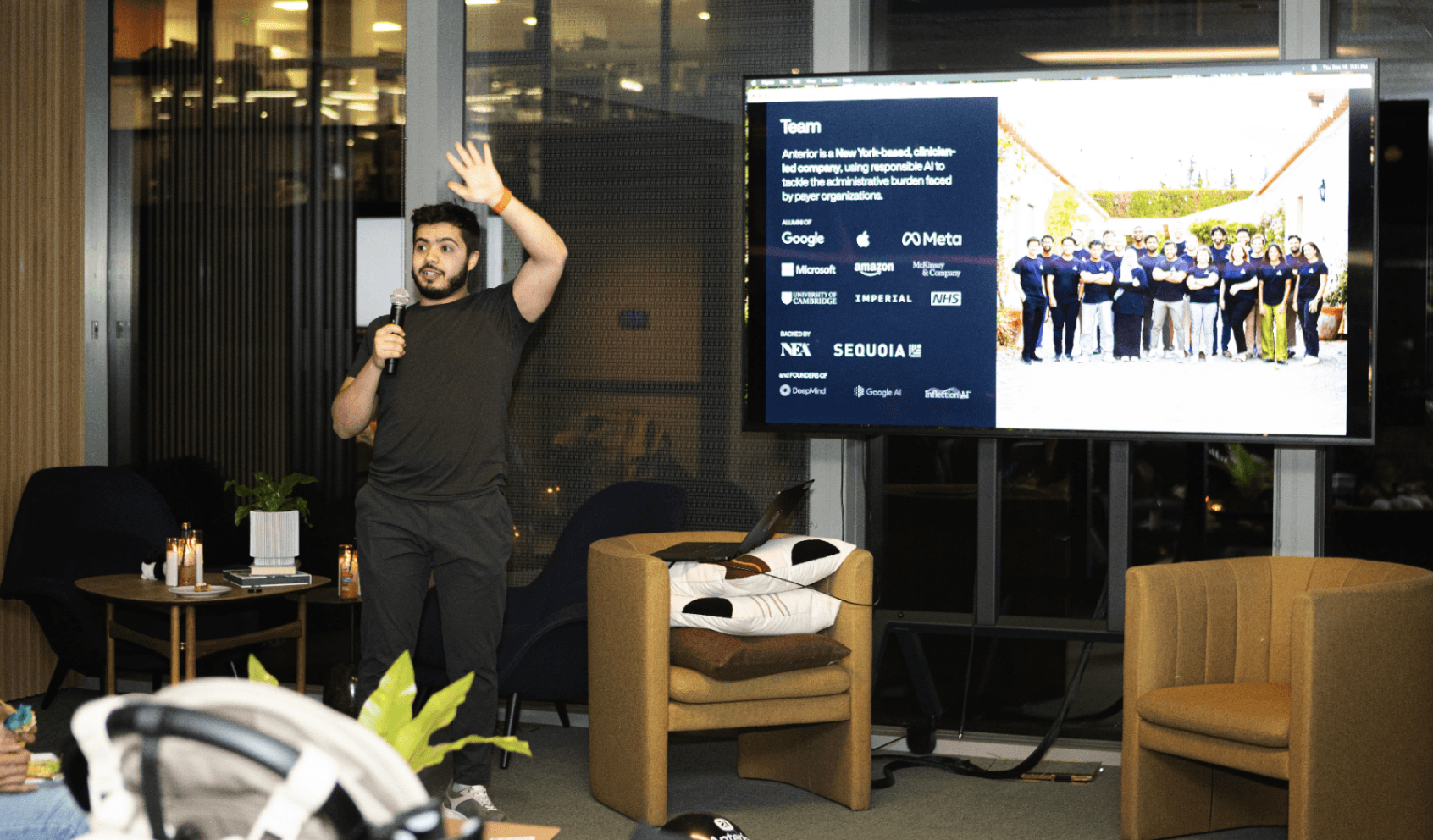
“Abdel, you’re already a doctor,” his father frowned. “Why would a doctor get an IT degree?”
For his parents, the decision to pursue a computer science degree raised more questions than it answered. A science for computers? The man who fixed their television was hardly a scientist.
Though confused, they softened their objections into resigned sighs. As Libyan refugees, uncertainty had been the only constant in their lives. The IT degree—"software engineering," their son called it—was simply another leap they would have to learn to accept.
𓅪𓅪𓅪
With his family's blessing, Abdel graduated from UCL and spent his first year at Google. It was there that he first witnessed the expansive potential of new technologies and their potential applications in medicine. Software, he gleaned, offered a more scalable approach to healthcare than his own experience of treating patients one by one.
With the influx of AI products, the world has already begun building clinical tools that sharpen diagnostics, refine treatment, and push the boundaries of care. Despite these advances, Abdel noticed that much of healthcare’s administrative backbone—benefit verification, claims processing, and insurance—remained largely underbuilt. Health plans held the keys to a $5 trillion market, along with the data required to meaningfully train AI systems. It was a promising and unsaturated space.
And yet, it proved a challenging market to access. While most companies were building for providers, where they could start small and grow over time, the insurer side offered no such path. Early success depended on winning a large, multi-million-dollar insurer as a young startup.
Despite this challenge, Abdel is building to change this space. By 2026, Anterior had raised $64 million in funding from Sequoia, NEA, Kinnevik, FPV, and ODDBIRD.
𓅪𓅪𓅪
Anterior is a clinician-led company built on the premise that administrative workflows are crucial to the vitality of healthcare. By enabling health insurers to deploy AI automation within clinicians' workflows, Anterior frees clinicians from administrative burdens, allowing them to focus on patients. Anterior is not simply the supplementation of AI in healthcare, but an amalgamation of medicine and artificial intelligence, where the company works alongside medical professionals to ensure the quality of these workflows.

In Anterior’s recent deployment with Geisinger Health Plan, cancer care approvals that previously took weeks now happen in roughly 155 seconds—often while the patient is still in the consultation room. Patients can start treatment in seconds rather than weeks. In a field where seconds can make the difference between life and death, Anterior offers a way to save lives beyond scalpels and scrubs.
“Much of the industry uses AI to increase the flow of existing workflows—more money buys faster horses.” Anterior’s thesis isn’t to build faster horses, Abdel notes, but instead to rebuild the track they run on. Anterior believes the real opportunity lies in building an entirely different operating model that embeds a continuous AI reasoning layer across healthcare to streamline the patient's care journey. When fully implemented, healthcare will be rapid and proactive, and feel as effortless as swiping your credit card to buy a coffee. With its most recent $40 million round, the goal is within reach—it seems the IT degree was worth it after all.